The Ultimate Guide to Industrial Gas Compressors: Helium, Nitrogen, and Argon
Introduction: The Invisible Power of Industrial Gases
When facility managers and engineers discuss industrial compression, the conversation almost always defaults to standard atmospheric air compressors used to drive pneumatic tools on a factory floor. However, in the high-tech, highly specialized industrial sectors of Qatar—ranging from massive petrochemical refineries in Ras Laffan to advanced aerospace manufacturing, specialized TIG welding operations, and cryogenic cooling facilities—standard atmospheric air is completely useless.
These advanced processes require highly purified, specific industrial gases: Nitrogen, Helium, and Argon.
Compressing these specialized gases is an incredibly complex engineering challenge. You absolutely cannot pump pure helium or argon through a standard industrial air compressor. Doing so will instantly contaminate the pure gas with lubricating oil, destroy the internal seals of the compressor, and result in catastrophic, massive leaks of incredibly expensive gas.
You need a highly specialized gas compressor supplier in Qatar. Autonex is the premier distributor of heavy-duty, highly engineered industrial gas compressors. In this definitive guide, we will break down the specific applications for Nitrogen, Helium, and Argon, and explain the extreme engineering required to safely compress them to massive pressures.
The Three Pillars of Industrial Gas
Every industrial gas possesses entirely unique physical and chemical properties. A compressor must be specifically designed, metallurgically coated, and sealed to handle the specific gas it is compressing.
1. Nitrogen Compressors: The Blanket of Safety
Nitrogen is the undisputed workhorse of the petrochemical industry. Because it is an “inert” gas (meaning it completely refuses to react chemically with other substances and physically cannot catch fire), it is used heavily as a safety blanket.
Critical Applications in Qatar:
- Tank Blanketing: In massive crude oil storage facilities, a Nitrogen Compressor pumps high-pressure nitrogen into the empty space above the oil. This physical blanket of nitrogen pushes the oxygen out of the tank, making it chemically impossible for the oil vapors to catch fire or explode.
- Pipeline Purging: Before maintenance can be performed on a highly explosive natural gas pipeline, massive Nitrogen Compressors are used to blast the flammable gas out of the pipes, leaving them perfectly safe for welders to work on.
- Food Packaging: High-pressure nitrogen is used to displace oxygen in food packaging, preventing potato chips and coffee from going stale or spoiling.
2. Argon Compressors: The Shielding Gas
Argon is another incredibly powerful inert gas, but it is significantly denser and heavier than nitrogen. Because of its unique density, it is heavily utilized in high-temperature manufacturing environments where extreme heat would normally cause metal to violently react with oxygen in the air.
Critical Applications in Qatar:
- Advanced TIG and MIG Welding: When welding specialized aerospace alloys, titanium, or massive structural steel beams, exposing the glowing, molten metal to standard air will cause it to instantly rust and become brittle. An Argon Compressor supplies a continuous, high-pressure “shield” of pure argon gas over the weld, preventing the oxygen from touching the molten metal and ensuring an incredibly strong, structurally perfect weld.
- 3D Metal Printing: In advanced industrial manufacturing, massive Argon Compressors are used to maintain a completely inert atmosphere inside metal 3D printers, preventing the microscopic metal powder from exploding or oxidizing.
3. Helium Compressors: The Cryogenic Marvel
Helium is the second lightest element in the entire universe. It is incredibly difficult to capture, massively expensive to purchase, and notoriously difficult to compress because its microscopic atoms are so tiny that they can physically leak straight through solid rubber seals.
Critical Applications in Qatar:
- Cryogenics and MRI Cooling: Liquid helium is the coldest substance known to humanity. Helium Compressors are the absolute heart of cryogenic cooling systems, used extensively to super-cool the massive superconducting magnets inside hospital MRI machines and highly advanced scientific research equipment.
- Deep Sea Commercial Diving: In the offshore oil and gas industry, commercial divers operating at extreme depths cannot breathe standard air. They require a specialized mixture called “Heliox” (Helium and Oxygen). Massive, strictly certified Helium Compressors are used on diving support vessels to safely mix and pump this life-saving gas down to the divers.
The Engineering Behind the Compression
Why can’t you use a standard air compressor for these gases? The answer lies in the intense, uncompromising engineering required to prevent contamination and leakage.
Zero-Leakage Hermetic Sealing
Because industrial gases like Helium and Argon are phenomenally expensive, a leaky compressor is a massive financial disaster. Standard air compressors use basic rubber O-rings that leak tiny amounts of air constantly (which doesn’t matter because air is free).
Autonex supplies highly specialized gas compressors featuring advanced Hermetic Sealing and specialized labyrinth seals. Every single joint, valve, and piston ring is machined to microscopic tolerances to ensure that absolutely zero gas escapes the compressor block. When compressing Helium, the seals are manufactured from advanced polymers and Teflon to prevent the microscopic atoms from slipping through.
Oil-Free Compression Technology
If you are compressing pure argon for a sensitive aerospace weld, or pure nitrogen for food packaging, you cannot have a single drop of lubricating oil mix with the gas.
Autonex supplies heavily engineered 100% Oil-Free Gas Compressors. Instead of using oil to lubricate the internal pistons or rotors, these compressors utilize advanced, self-lubricating ceramic and Teflon-coated components. This guarantees that the gas exiting the compressor is exactly as pure as the gas entering it, strictly complying with ISO 8573-1 Class 0 purity standards.
Explosion Proof (EXD) Enclosures
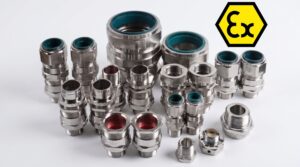
Because gas compressors are often installed directly inside petrochemical refineries (Zone 1 Hazardous Areas), they must be protected against internal sparking. If a Nitrogen Compressor’s electrical motor sparks near a separate methane leak, the facility will explode. We supply gas compressors housed entirely within heavily certified ATEX and IECEx Explosion Proof (EXD) enclosures, ensuring absolute safety in the most dangerous environments on earth.
Frequently Asked Questions (FAQs)
How do you prevent Helium from leaking out of the compressor?
Helium is incredibly difficult to contain. Our specialized Helium Compressors use a “closed-loop” recovery system. Any microscopic amount of helium that manages to slip past the primary piston rings is instantly captured by a secondary recovery manifold and routed straight back into the main compression chamber, ensuring zero loss of this incredibly expensive gas.
Can a Nitrogen Compressor generate its own Nitrogen?
No, a compressor only squeezes the gas to make it high-pressure. However, Autonex can supply a complete skid system that includes a Nitrogen Generator (to pull nitrogen out of the ambient air) combined directly with a Nitrogen Booster Compressor to instantly boost that generated gas up to massive pressures like 3,000 PSI for tank blanketing.
What is a “Booster” Gas Compressor?
If a gas delivery company drops off a cylinder of Argon at 500 PSI, but your advanced welding machine requires 2,000 PSI, you cannot use the cylinder. A Booster Compressor solves this. It takes the low-pressure gas from the cylinder and “boosts” it up to the massive pressure you require, ensuring you can completely empty the cylinder and not waste any expensive gas.
Are your gas compressors loud?
Industrial gas compression requires massive mechanical force, which traditionally generates significant noise. However, Autonex supplies gas compressors equipped with advanced acoustic sound-dampening enclosures. These heavy steel canopies are lined with fire-proof acoustic foam, dropping the decibel level down so low that operators can have a normal conversation standing directly next to the machine.
Conclusion: Do Not Compromise on Gas Integrity
Compressing highly specialized, incredibly expensive industrial gases is not a task for amateur equipment. Attempting to force helium, argon, or nitrogen through a standard, unsealed air compressor will instantly result in ruined gas purity, massive financial leaks, and severely damaged machinery.
Whether you need an absolutely leak-proof, high-pressure Helium Compressor for a hospital MRI wing, an incredibly robust Nitrogen Compressor for explosive tank blanketing in Mesaieed, or a 100% oil-free Argon Compressor for advanced aerospace welding, Autonex has the specific metallurgical mastery and the global engineering partnerships required to deliver perfection.
Call to Action: Protect the purity of your industrial gases and stop wasting money on leaky equipment. Contact Autonex today, the premier gas compressor supplier in Qatar. Let our specialized mechanical engineers audit your gas flow requirements and specify a heavily customized compression skid designed to perform flawlessly for decades.